


Last week I went on my friend Suzy Weiss’s podcast and somehow we ended up talking about Spencer Pratt entering the LA mayoral conversation. And by “somehow” I mean it’s currently on everyone’s mind in Los Angeles. Politics in LA right now feels half civic process and half group chat discourse. Half existential crisis and half reality show. A little spooky if you ask me!
Watching the LA mayoral debate, I kept having flashes of being a reality television producer almost twenty years ago. Not in a cynical way. More like muscle memory. Watching the candidates manage tone and timing and audience reaction. Noticing who understood performance and who resisted it. Watching people try to seem authentic while also trying to win. Honestly, it felt icky all around, like the moment was new and we’ve also been here before all at once.
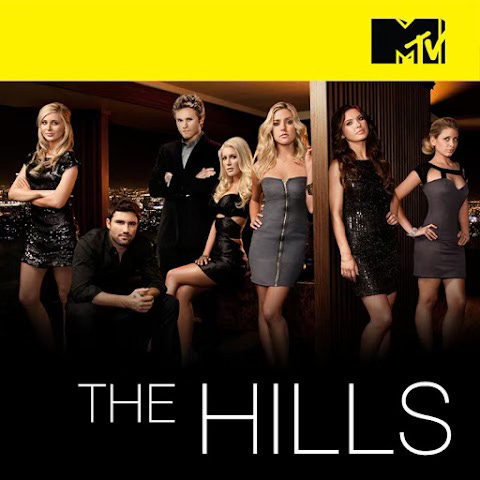
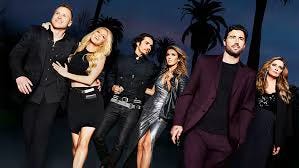
I produced MTV’s The Hills for seven years of my life. And later The City. And one of our, cast members, Spencer Pratt, is literally running for Mayor of Los Angeles. At this point producing The Hills suddenly feels a little like having produced The Apprentice. Did the producers of The Apprentice know Donald Trump would become president? Probably not. Would they believe it if they saw it? I bet absolutely.
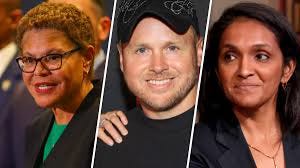
A quick map of the race, since I’ll keep circling back to it. Karen Bass is the incumbent, running on experience and continuity, with the fires response as the line her critics keep returning to. Nithya Raman, the District 4 city councilmember, is running as the progressive option, with a council record on housing and homelessness she’s leaning into as the case for City Hall. Spencer Pratt is running as the anti-establishment outsider, leaning into voter frustration over homelessness, crime, and wildfire response. He filed after his home was destroyed in the 2025 Palisades fires.
Which makes the race feel even more bound up with media and narrative and emotion. The people who show up aren’t just voting on policy. They’re voting on feeling. On trust. On frustration. On who they believe understands the moment they’re living through.
And I can see why different people are landing in different places. Some want institutional experience because the city feels unstable. Some want disruption because the system itself feels broken. Some want someone emotionally reassuring. Some want someone loud enough to match the chaos they feel around them.
Here’s the truth. I love LA. And I think all three of them do too. Bass is running on the steadiness argument. Nithya is running on the policy-record argument. Spencer is running on the disruption argument, where bluntness reads as awareness. I’m still working through how I feel about each of them. And I think that is allowed.
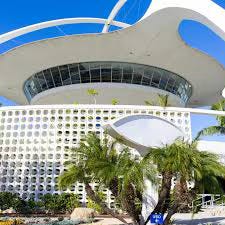
But at this point you can absolutely imagine landing at LAX during the Olympics and seeing Spencer Pratt’s face the second you walk out of the terminal. Which might just be the producer in me.
Because that’s not just politics anymore. That’s audience psychology.
That reaction didn’t come out of nowhere. I’ve lived inside the world of reality and performance and audience attachment — or the start of whatever we’re calling parasocial anymore. From ages twenty-three to thirty-one I had a front row seat to the exact moment reality television stopped being a guilty pleasure and started becoming the operating system for modern life.
People always ask me if The Hills was fake and the answer is both yes and no. Was it 100 percent fake? No. Was it 100 percent real? Also no.
So here’s what this moment takes me back to. // A reflection on The Hills
This was my first big girl job as a newly minted “talent producer,” which at the time sounded fake even to me, because nobody really knew what reality television production was yet. A talent producer was basically the liaison between cast and production. Part producer, part therapist, part negotiator, part emotional support hotline (my blackberry.)
It’s your birthday and you want to celebrate? Great, let us book Koi. You and your friend have tension? Maybe it’s best to discuss at Toast Cafe. These were all locations that lived in the pages of Us Weekly in the early 2000s. I’d sit in vans and watch the cast eat two or three meals to capture two or three minutes of dialogue. The job was listening to relationship problems in real time and gently guiding conversations without breaking the illusion that nothing was being guided at all.
That strange middle space was the entire point of The Hills.
When The Hills started in 2006, it really was one of the first shows sitting between scripted television and traditional reality. It looked cinematic. It looked aspirational. But the feelings were real. The heartbreak was real. The friendships were real. The jobs were not — to us, at least. To them, sorry, Teen Vogue.
The New York Times TV critic Virginia Heffernan once described our cinematography as creating “tension as in a Michael Mann movie.” If Laguna Beach looked perpetually like late afternoon — the mellow light of cocktail hour, the promise of a party — The Hills looked like a workday.
That was Hisham Abed, our DP, doing color grading and online finishing on what people were still calling junk television. Rachel Morrison, our other DP, would later become the first woman ever nominated for a cinematography Oscar. We were lighting it like a film. At every location we’d arrive hours before call time just to make sure our talent was lit right. We were serious people doing a not-so-serious job. I loved our cast. I used to call them “the kids,” even though I was only four years older.
I cried when Lauren and Jason broke up. I cried when Heidi and Lauren broke up. Those dynamics felt real because they were real. These were actual young people trying to figure themselves out while also becoming public characters in real time. Transplants to Los Angeles building identities and relationships and careers with cameras following them around.
We loved making it. It might’ve been my favorite job to date. I loved watching Brody on a date debate whether lobster bisque counted as pasta, and watching Lauren and Whitney stress in Teen Vogue’s office (completely forgetting they were on the cover of the magazine).
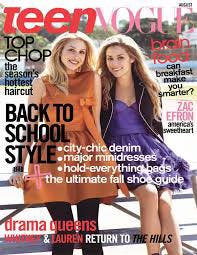
Filming through nightclubs without ever having to party myself. The restaurants and clubs of Los Angeles still feel like my own personal sets. The confidence I feel in a crowd or location is thrilling — I can always find the exit, and I still look at the lighting and wonder if Rachel will ask for more setup time.
We shot all over LA and it really became a love letter to the city. Katsuya dinners. Les Deux nights. The Grove at Christmas (where Santa told me he sold a script at Paramount.)
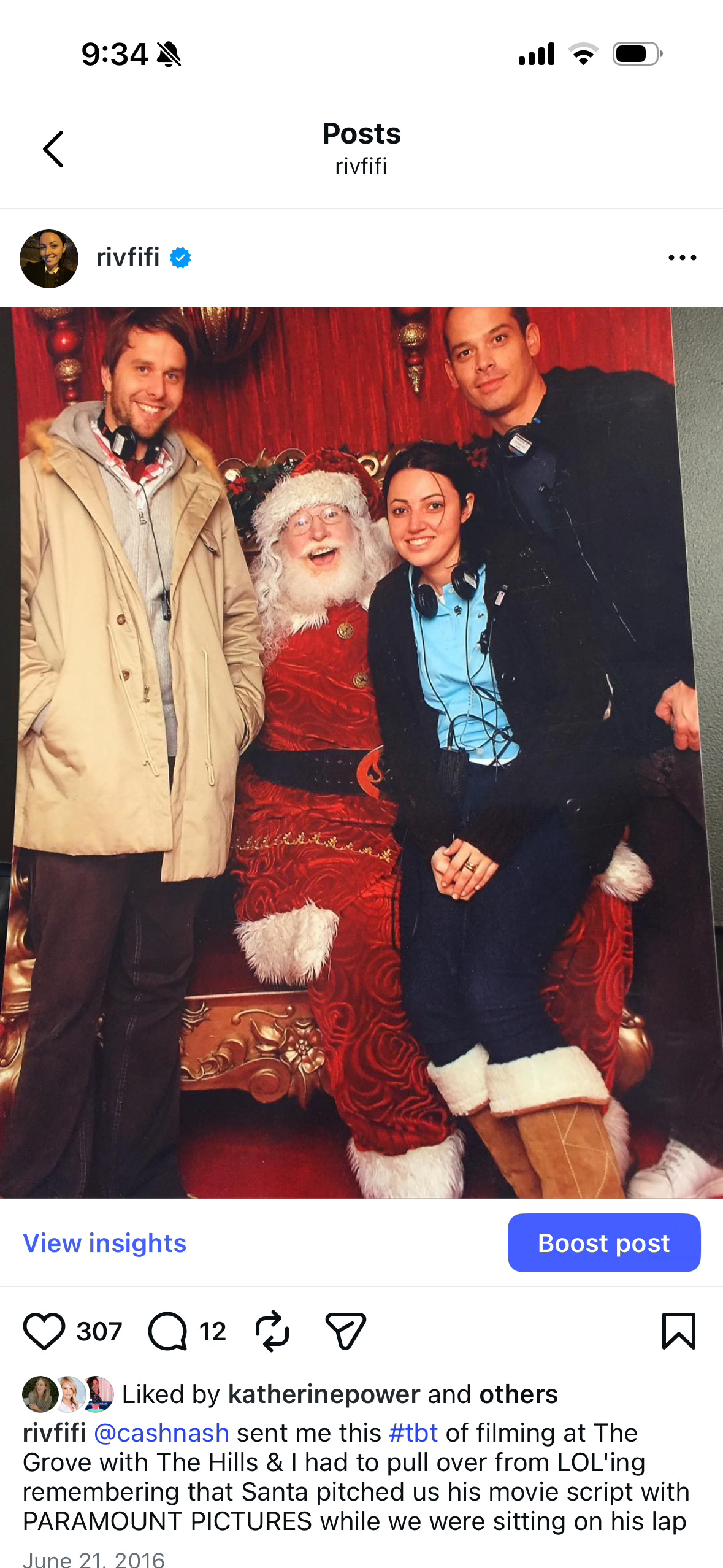
Tiny apartments in Hollywood. Long lunches on Robertson. Malibu beach houses. Parking lots in the Valley at midnight after someone stormed out crying. Me on my BlackBerry mid-scene, BBM’ing the cast: this episode airs after Christmas, do not mention the gifts.
After a while you really start to see human behavior patterns. You anticipate them. You know when a breakup is coming before the couple does. You know when someone is trying to hold back tears. You know when tension is about to erupt at dinner. Reality television changes the way you observe people. LA itself started to feel like a set sometimes. Or maybe the set just became LA. We were building fantasy out of real emotion.
Reality TV existed before us, of course. The Real World. The Simple Life. Survivor. But something shifted with The Hills era and that whole early 2000s reality wave. Suddenly audiences didn’t just want celebrities. They wanted intimacy. Access. Emotional realism mixed with fantasy. They wanted to feel like they personally knew people.
At the time, this still felt contained. The Hills peaked at around 4.8 million viewers an episode in 2008. The series finale drew about 3 million. Big numbers for cable, and for us.
That isn’t where we are now. Reality TV is over 35 percent of prime time programming today. And that’s just television. TikTok delivers reality-style content — day-in-the-life vlogs, drama exposés, friend group fractures, public unravelings — to more than a billion daily users worldwide. The genre didn’t shrink. It escaped containment.
And honestly we all know reality television arrived during a larger collapse of trust — in institutions, in media, in polished authority figures who felt distant and managed and impossible to read. Reality characters felt different.
Not because they were always better people, or even always honest people. But because they were characters. You understood their motivations. You understood the role they played in the ecosystem. They became familiar. Predictable in the way people you know in real life become predictable.
I remember sometimes arguing with Lauren about story or behavior and she’d say, “I would never ever do that.” And of course she meant it sincerely. But at a certain point even to us she had become a character too. In post-production we were shaping emotional arcs, defining traits, deciding what storylines felt true to who the audience believed she was. Not fake exactly. Just a heightened narrative. (Also, there is no one funnier than a reality TV editor. They are comedy geniuses.)
And weirdly audiences trusted that because emotionally the characters felt coherent. You trusted coming home to them every week. You understood who they were. Or at least who they were inside the emotional logic of the show.
This is the thing I think reality television actually did to us. It taught us to fall for real people. — but because real people are legible. You can read them. You can predict them. You feel like you understand what they want and why.
Here’s what reality television figured out before the rest of culture did. Performance was no longer something to hide. Performance became the virtue.
That’s how we got here.
Not just influencers. Not just politicians. All of us. We learned to narrate ourselves in real time. To shape our pain while still inside it. To think about our lives as story arcs. To understand attention as currency. To confuse visibility with intimacy. To package authenticity until authenticity itself became a kind of performance.
Reality television didn’t create this entirely. But it rehearsed it. It trained us for the internet that was coming.
I personally cannot fully watch most reality shows anymore because I can hear the machinery too clearly. The ADR is too obvious. I can hear production nudging scenes. I notice the room tone reaction shots immediately. Somebody glancing away during silence suddenly becomes a devastating emotional reaction in the edit.
Human drama remains undefeated. Because the rise of reality was never really about television. It was about the rise of the performer. And performer means something different now. We used to think reality television was reflecting culture. Now I think it was training culture.
So that brings me back to the current moment, the one we are living in now, built in part on reality shows just like this. I picture that Mayor greeting us at the airport at LAX. Does that image look right? Would I put it there? Does it matter?
These are the questions I’m thinking about!
Are we choosing leaders, or casting them?
When trust in institutions collapsed, did legibility quietly become the new credential?
Is performance now a disqualifier, or the actual qualification?
Where’s the line between a public figure and a public character — and does it still exist?
If betting markets are the new polls, what are the polls?
Would The Hills be difference if we had secured the Kelly Clarkson song we wanted instead of Natasha Bedingfield’s Unwritten?
Is the Grove really Feng Shui?
Would Koi work if it was open now?
This is my fav thing I’ve read this week
Love this !!!!!