


10/12/1948.
I say it the way other people say a prayer. At pharmacy counters. At intake desks. At two in the morning in waiting rooms that all start to look the same. It is the one thing the system never forgets, because I never let it. It’s my father’s birthday. I know it better than my own. Once, picking up my own prescription, I gave it by accident. The pharmacist didn’t notice. I didn’t correct her. I just picked up his meds and moved on with my day.
I’ve been an executive assistant, a producer, a CEO. Different titles, same job: get the right information to the right people at the right moment and anticipate the problem before it becomes a crisis. Which means I accidentally know how to produce cancer.
My father was diagnosed with stage four esophageal cancer shortly after his seventieth birthday. It eventually spread to his lungs and later to his brain. He is seventy-seven now, which according to every statistic we were handed at the beginning is something close to a miracle. Seven years in and he keeps collecting extra lives like it’s a video game.
Cancer doesn’t travel alone. It brings friends. Sepsis. Pneumonia. Most recently a fractured hip from a dangerous fall. Over the past several years I have been to emergency rooms over 50 times with him, across about ten different ERs in Los Angeles. Each one greets us like we have never existed before. Hospitals are not all equal. Religiously affiliated hospitals have been consistently better in my experience. Adventist Health and St. Joseph’s have been the best for us. Not an ad. Field research done the hard way.
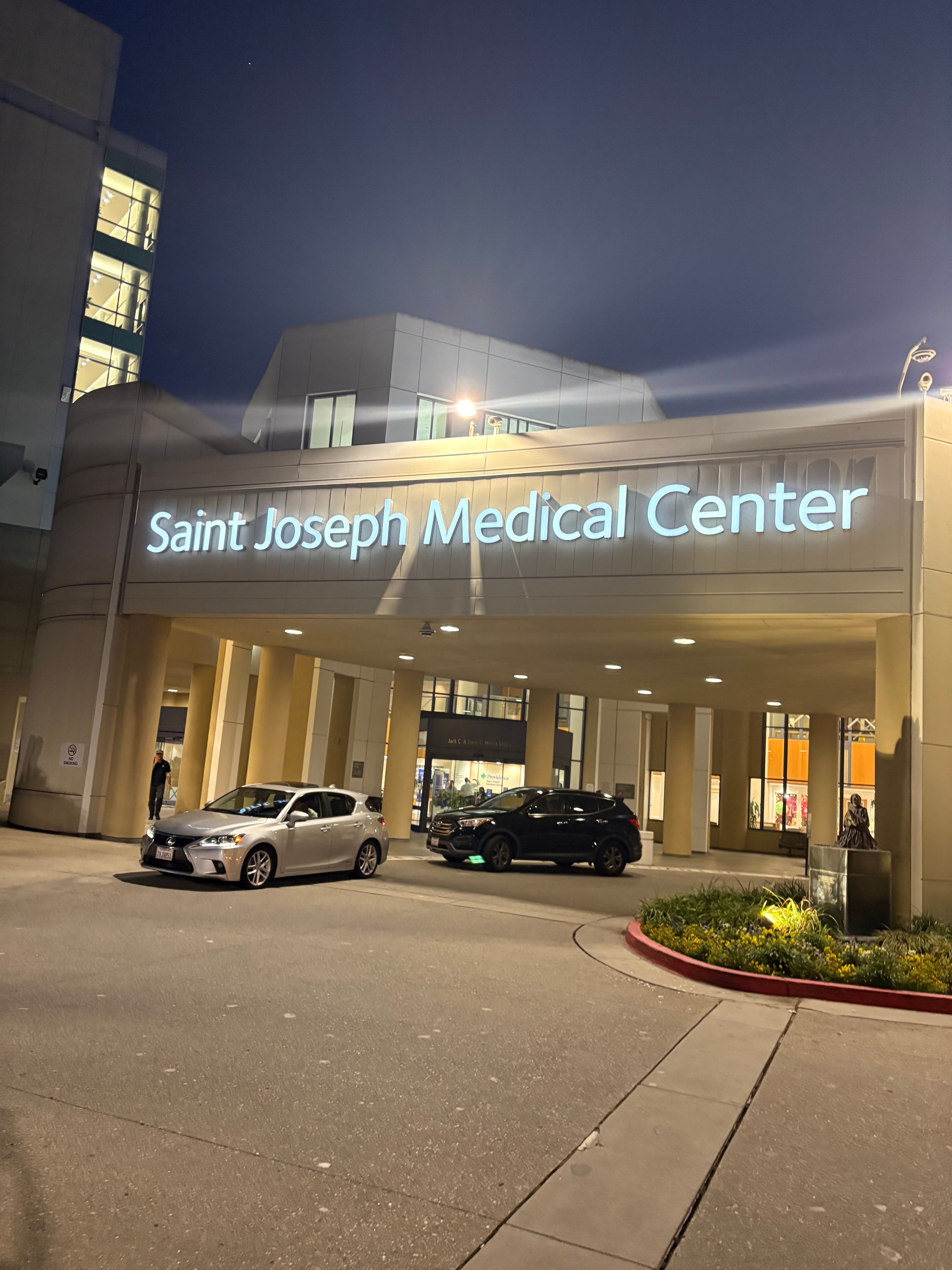
The medication list we confirmed at the last hospital is gone. The allergy that nearly killed him two visits ago is news to everyone. Seven years of history is stored somewhere in a filing cabinet in a dimension I cannot access.
And yes, we have MyChart. The portal of hell. The catch is that MyChart belongs to whichever hospital system issued it, not the one you’re standing in right now at midnight. So even with every piece of technology supposedly designed to fix this, I still have to walk a new nurse through twenty-plus medications and seven years of history from memory every single time.

The official explanation is HIPAA, the Health Insurance Portability and Accountability Act passed in 1996. Its Privacy Rule was designed to protect your medical information and give you control over who sees it. We are literally at the hospital. Please discuss his history all day. That is why we are here. WHAT PRIVACY!


Here is the twist. Under HIPAA you actually do have the right to your own records. You can request them and have them sent to another provider. Hospitals are legally required to comply within thirty days. Thirty days. I am usually back in an ER in two.
So I stopped waiting for the system to catch up and became the system myself.
After seven years I’ve learned something important: hospitals are not built to remember you. They are built to treat you in episodes. One visit, one crisis, one shift at a time. Then you are discharged back into a system with no memory of what just happened.
Every ER is its own island. The information doesn’t travel with you. The chart rarely follows. This is not an accident. It is architecture. HIPAA gets the blame but HIPAA is mostly the excuse. . I’m no Erin Brockovich but don’t we have the technology to fix this. AI is supposedly going to transform healthcare, connect the data, close the gaps, carry the history forward. I need this to happen now!
But the people inside this broken machine are not the problem.
These are people who chose a profession built around keeping strangers alive. They are all better than us. They are doing it with incomplete information, impossible hours, and a handoff system that would make any reasonable person weep. The nurse on her third twelve-hour shift who just inherited your parent is doing her absolute best. The volunteers handing you a clipboard at midnight are genuinely trying. Some of them are angels. I mean that without a shred of irony.
The system makes failure likely. The people absorb the blame. The patients and families absorb the cost. Not just financial cost. The cost of time, of repeating yourself until your voice goes flat, of watching someone you love get treated like a stranger in a place that should already know his name.
Think of it like 50 First Dates. Every new shift, every new nurse, is meeting your person for the first time. She is starting from zero and so are you.
A family member told me early on, “When your dad is in the hospital, that’s the safest place he can be.” I hold onto that like a life raft. When the call comes, and it always comes, I feel the pit in my stomach, take a breath, and remind myself that he is somewhere with doctors and monitors and people whose entire job is to keep him alive. My job is just to get there and make sure they know who he is.
THE ER CHEAT SHEET What to do when you suddenly become the medical producer
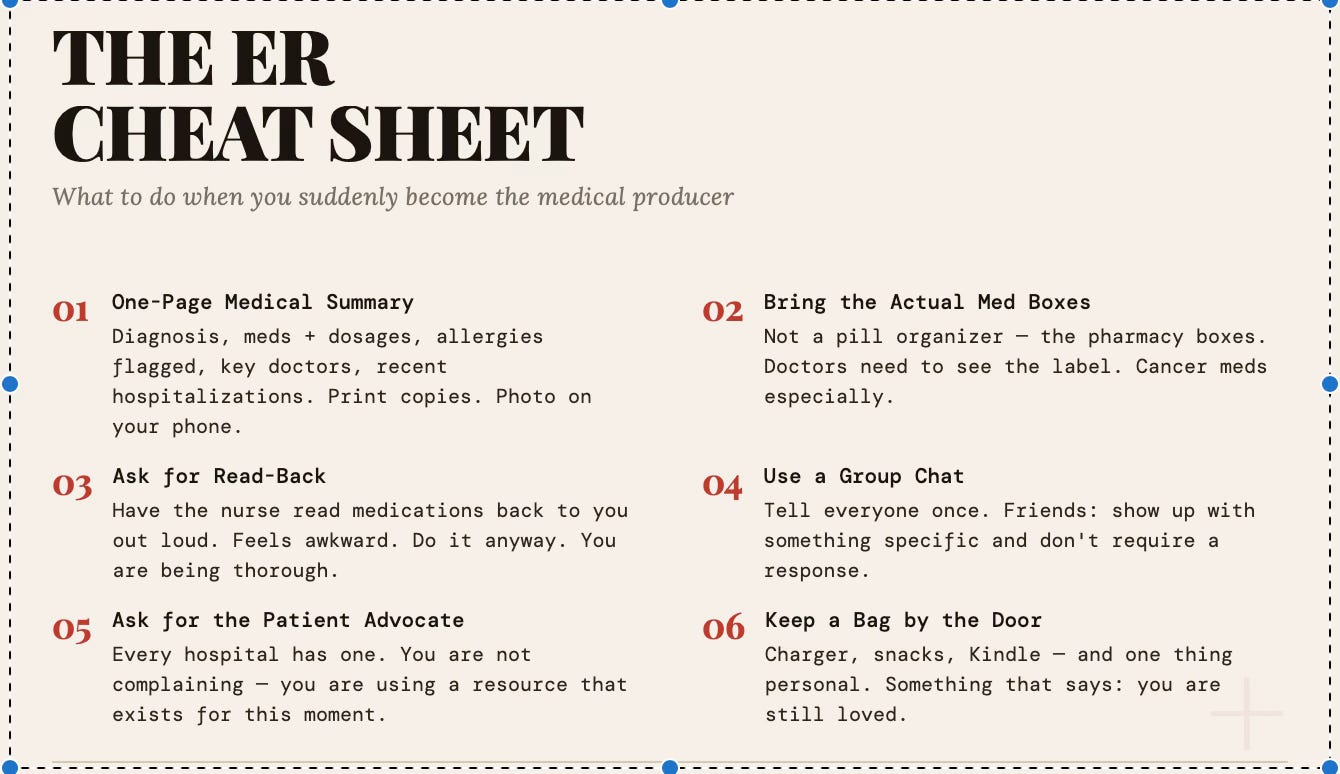
Bring a one-page medical summary. Diagnosis and short history. Full medication list with exact dosages. All allergies clearly flagged. Key doctors with phone numbers. Recent hospitalizations with dates. Print copies and keep a photo on your phone.
Bring the actual medication boxes, not a pill organizer. The boxes with the pharmacy labels. The doctors don’t like you to take medicine they don’t have control over but sometimes your patient will need specific cancer meds the hospital cant provide. They need to see the box.
Ask the nurse to read the medications back to you out loud. It feels awkward. Do it anyway. You are not being difficult. You are being thorough.
Food helps more than you think. If the nurse approves outside food, bring something they will actually eat. Also, you have to go greet your postmate’s downstairs
Use a group chat for updates. Tell everyone once so you don’t spend the whole day texting. And if you’re the friend on the other side . Show up with something specific and don’t require a response.
Ask for the patient advocate if you are stuck. Hospitals have ombudsmen whose job is to solve problems during a stay. Ask for them by name. You are not complaining. You are using a resource that exists specifically for this moment.
Your job is not to fix everything. Sometimes your only job is to be the steadiest person in the room.
ER Bag
Keep a bag by the door that is always ready. It has the usual things : charger, Kindle, snacks for me and one thing that is personal, my great-grandmother’s blanket. We bring it every time. There is something about wrapping my father in it, this man who is seventy-seven and has survived things that should have killed him, and knowing that his grandmother’s hands made it. That he is being held in some way by her. I don’t know a softer thing in the world than a grandmother’s love. In a room full of fluorescent lights and beeping machines, that blanket says something simple: you are still a person and you are still loved.
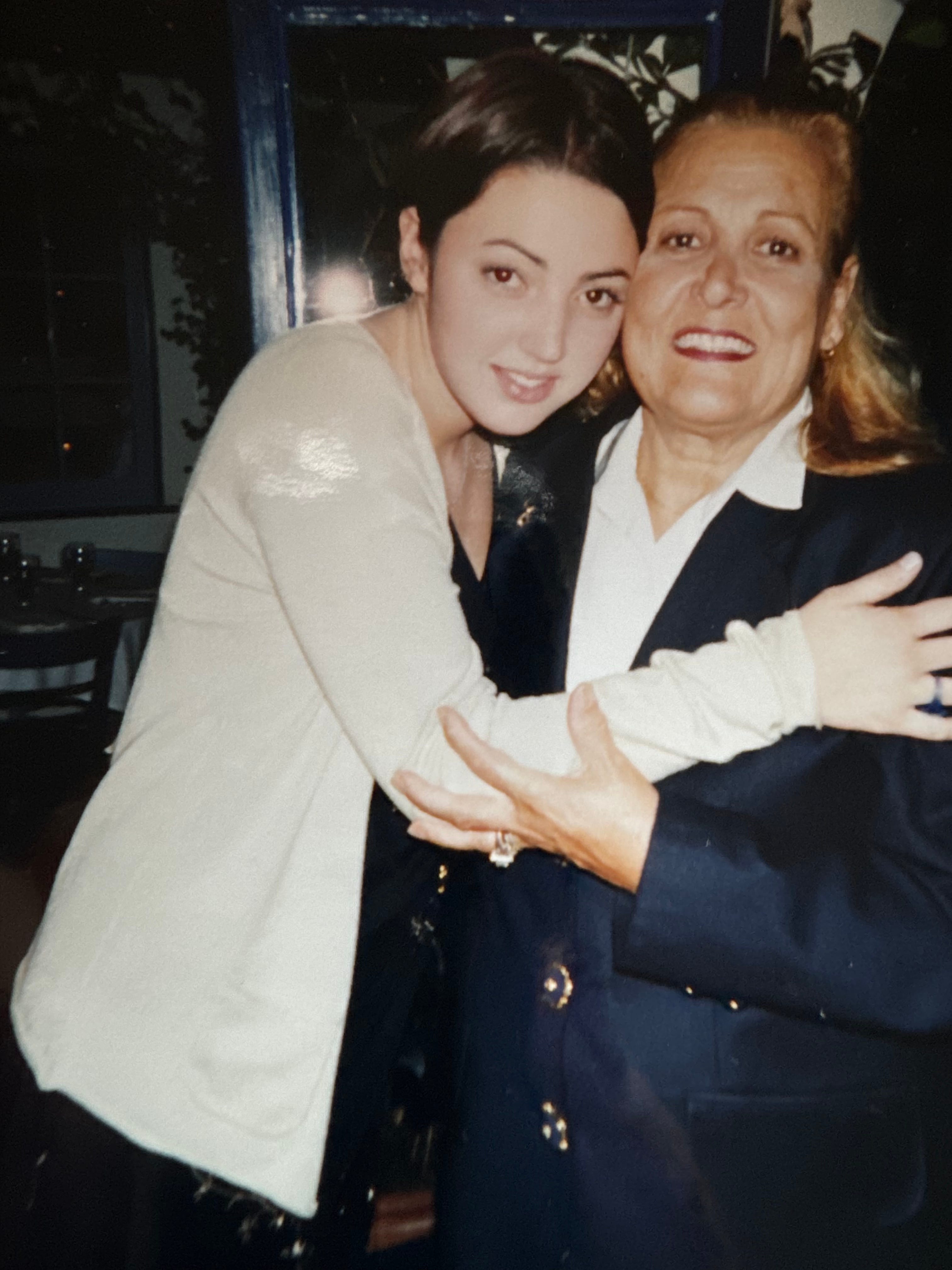
Me and my grandma. just because !
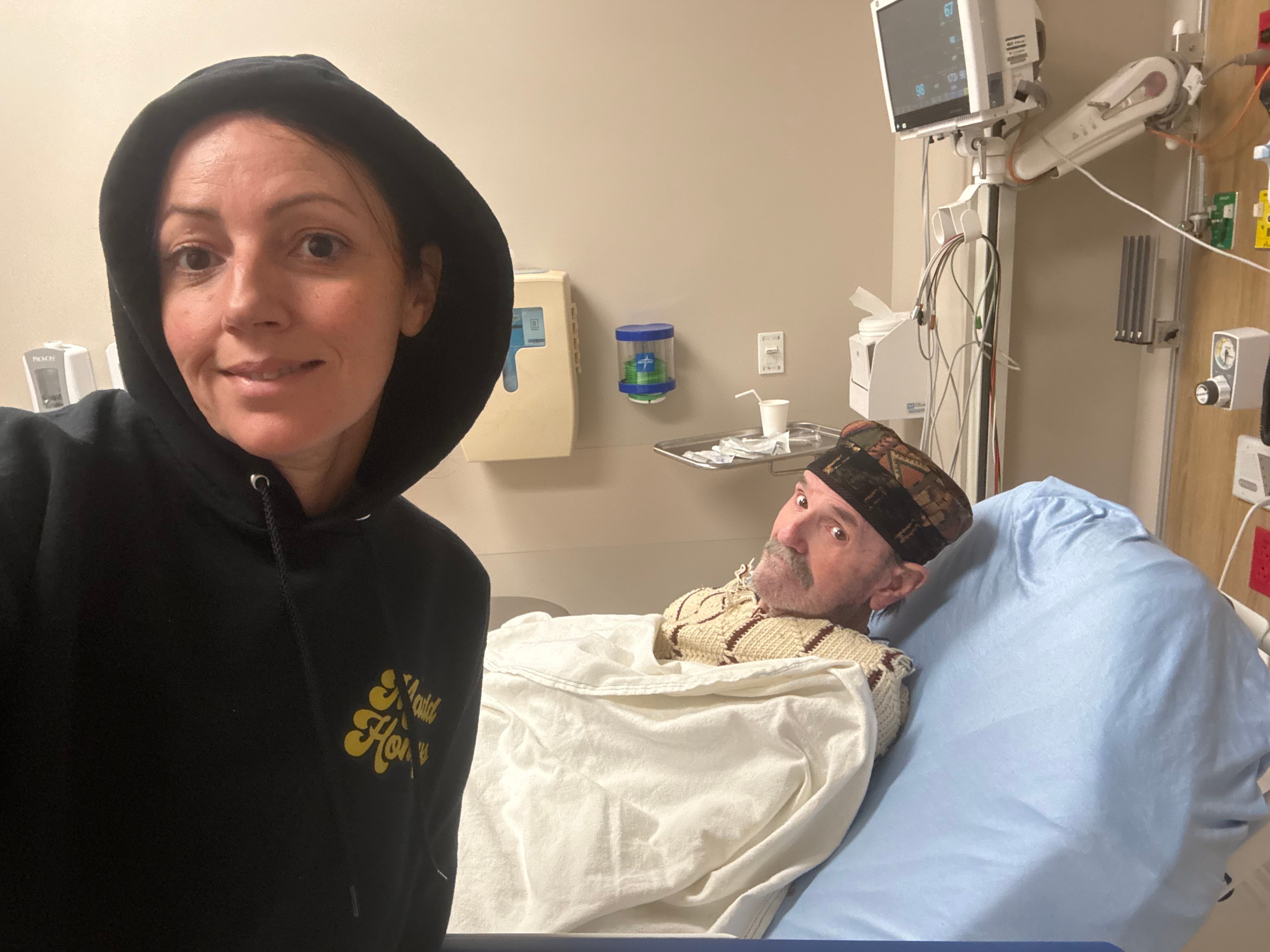
Turns out it’s actually a strange honor to produce my father’s cancer. Not the disease, but the job of making sure the system remembers the human inside the chart. If you find yourself in your own production era, I’m here. We all deserve an advocate.
10/12/1948.
I’ll keep saying it until the system learns it too.
The best daughter ever ❤️
1) I thought this article was so insightful!
2)
Advent health is next level. They genuinely care about employee satisfaction, which in turn enhances patient satisfaction.