


In an early dispatch I wrote about trends — specifically the ones worth betting on and the ones that were going to embarrass us all in three years. The framework was simple: fad, fail, or forever. I am happy to report, with full confidence and some gloating, that frozen yogurt is forever.
I will admit I had to defend this position recently. A friend came at me with evidence that froyo was over, done, a relic, a nostalgia play at best. But I knew my Los Angeles ways were witchy and right on this one. There is a difference between a category going quiet and a category getting ready. Frozen yogurt was getting ready. Go Greek or go home baby!
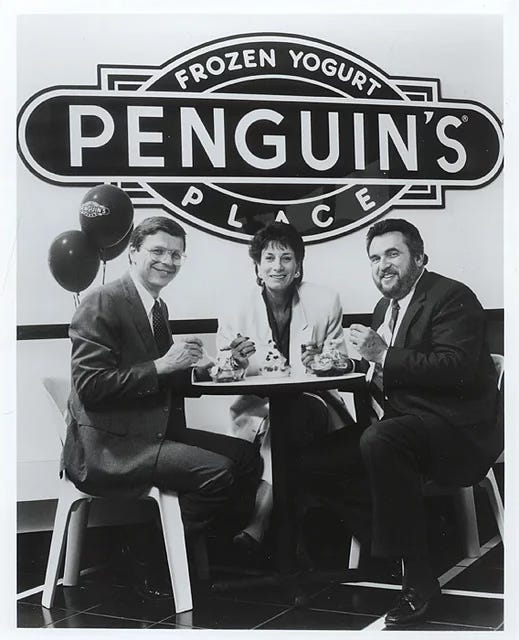
I’VE BEEN ABOUT THAT FROZEN YOGURT LIFE. Growing up we lived the Laguna-Manhattan coastal dream. My dad is a surfer, born in Long Beach, a longboarder specifically, which meant we had to live by the water and live by the swells. And in first grade we took a field trip to Penguins — one of the original Southern California frozen yogurt chains, open since the early eighties, at its peak with over 120 locations across LA — and learned how frozen yogurt was actually made. Not just learned — they let us go behind the counter! LOL! We got to add the ingredients into the big machine ourselves. What that was teaching us I don’t know. But it sure was fun. Later, in Beverly Hills, my school field trips would be to the set of In Living Color to watch the fly girl dancers. But this was more wholesome. Frozen yogurt is in my blood. I was an early adopter.
The obsession only grew from there. At some point — peak froyo era, peak me — my HelloGiggles co-founder and forever partner in crime Zooey Deschanel gave me a frozen yogurt machine as a gift.
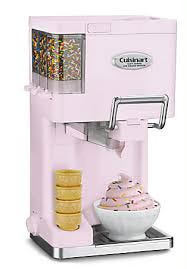
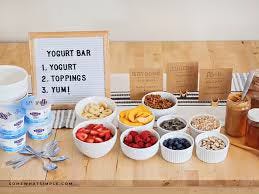
A dream realized. I was going to make my own. I was going to be the kind of person who makes her own frozen yogurt. What came out was soup. Enthusiastic, well-intentioned soup. Turns out making frozen yogurt is much harder than it looks and significantly less fun than just going somewhere and piling your own toppings. That said — and I stand by this as a genuine entertaining hack — if you order good Greek frozen yogurt and set up a toppings bar for a dinner party, you will be the most popular host. No machine required just details. Honey, cacao nibs, granola, fresh fruit. Huge hit. You’re welcome.
Here is the thesis before we go any further, because I think it matters and it also might trigger you: frozen yogurt has always followed the dominant diet culture of its moment. It was born from low-fat obsession. It died when low-fat died. Pinkberry resurrected it as a celebrity accessory and aesthetic moment. That died too. And now it’s back because protein is the new low-fat. Same human impulse — find a way to feel good about dessert.
If you feel like going down the historical rabbit hole with me, keep reading — because I did the research and it was genuinely very fun!
Here is what I found.
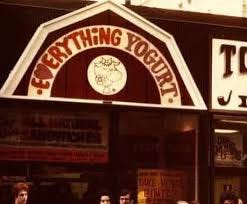
The first frozen yogurt chain in America was Everything Yogurt, which opened in New York City in 1976. New York was first — which surprised me! It’s so cold there! Everything Yogurt eventually had over 200 franchises.
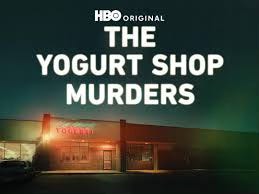
Then came I Can’t Believe It’s Yogurt in 1977 — which famously sued TCBY and has a murder at one of its Austin locations in 1991. There is actually a docuseries about this. It’s called The Yogurt Shop Murders and it debuted on HBO in August 2025. INTENSE.
Then TCBY — The Country’s Best Yogurt, which is a very sincere and sweet name — opened in 1981 in Little Rock, Arkansas, and became the one everybody actually remembers. By 1984 there were over 100 frozen yogurt chains nationwide. It spread across America like a rumor that being good could taste like something. Isn’t that so eighties. We were all just trying to be thin and feel okay about it. Or I mean I wasn’t — I was a child — but the adults around me sure were.
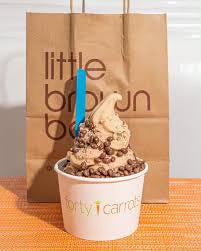
And worth noting for any classic New Yorkers: there is Forty Carrots — tucked into the seventh floor of Bloomingdale’s, back by the bedding department, where it has been serving frozen yogurt since the early 1970s. Predating Everything Yogurt. Predating TCBY. Predating all of it. They’re now serving their third generation of loyal customers and never needed a comeback because they never left. I cant think of a reason to go to Bloomingdale’s and I bet you can’t either.
Frozen yogurt was, essentially, the Diet Coke of ice cream. It was the thing you ordered instead of the thing you wanted, dressed up just enough to feel like a choice rather than a sacrifice. And the diet math was very specific: a cup of regular ice cream ran 250 to 350 calories with 14 or more grams of fat. Frozen yogurt clocked in closer to 100 to 150 calories with almost no fat. In the fat-phobic eighties and nineties that was the entire pitch. Low fat. Low guilt. A transaction you could feel good about.
I need to name something : frozen yogurt can be extremely ED culture coded. A diet hack masquerading as a treat. A lot of us grew up watching the adults in our lives treat froyo like a moral achievement — a reward for restraint. That was the vibe and it was complicated. And here is the thing that I’ve quietly observed : the tallest, skinniest, most effortlessly chic people I have ever met eat full fat ice cream and drink regular Coke. They are not doing the math. They are not negotiating with their dessert. They are just eating what they want. The diet hack was always a little bit of a lie and I think on some level we all knew it.
Frozen yogurt sales had risen over 200 percent per year through the late eighties and early nineties, and then fell by more than half by 2005. Low-fat diets fell out of fashion., finally. Snackwells are so gross. Ice cream came back in low-fat formats and cut into froyo’s whole reason for existing. The category got culturally stale and everyone moved on.
And then Pinkberry changed everything. READER I LOVED PINKBERRY.
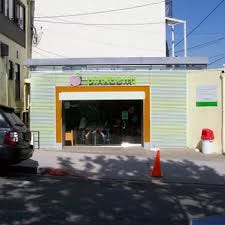
Pinkberry was different not just because of the yogurt — which was genuinely tart and genuinely not sweet, a real departure from the creamy sugary eighties version — but because of the place itself. A lime-green interior, plants everywhere, modern globe pendant lights. It was designed to be photographed before Instagram existed. Two flavors only. Fresh fruit on top. No walls of toppings, no chaos, no by-the-ounce scale that would come later — and I personally hate weighing my food but that’s just me.
Founder Shelly Hwang originally wanted to open an English teahouse on that same tiny residential street in West Hollywood. The city rejected her alcohol permit. So she went with her backup plan. A rejected liquor license launched one of the most culturally significant food moments of the decade. You really cannot make this up. Also, West Hollywood filming permits are triple other cities, just a fun fact I remember from producing The Hills.
By spring of 2006 they were serving 1,600 customers a day — I think that sounds like a lot, but again I don’t know! Charlize Theron. Oprah. David Beckham. Everyone was holding a pink cup. The city of West Hollywood was issuing so many parking tickets from people double-parking to get there that Pinkberry became known as “the taste that launched a thousand parking tickets.” They had stanchions outside like it was a club. And in a way it was. We filmed The Hills all over that neighborhood — the Melrose location was practically a cast member or a crew snack favorite.
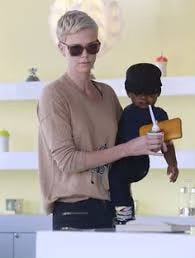
The original Pinkberry location closed in 2010 and was converted into an office building. There are about 72 locations left in the US — down from a peak of 154. The stanchions are long gone.
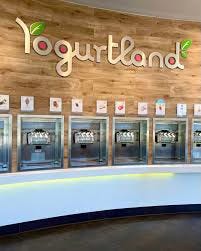
The self-serve era followed — Yogurtland, Menchie’s, sixteen flavors and a wall of toppings and the specific chaos of paying by weight. This was also, ultimately, too much. We got tired. We moved on — or back to ice cream.
The artisanal ice cream decade arrived and suddenly everything was small batch and the flavors read like a Diptyque candle. Lavender honey. Rosemary olive oil. Brown butter cardamom. You didn’t eat it so much as experience it. Salt & Straw had a line too but it felt more intellectual somehow. The more complicated the flavor the more precious it seemed. I remember pretending to love raspberry goat cheese to impress a co-worker. That trend is still here but quieter.
But another diet trend has appeared: the protein-packed psychosis everyone is currently in.
Which finally brings me to Go Greek.
A cup of Greek yogurt has 14 to 21 grams of protein. The average protein bar has around 20. A protein shake runs about 25. Which means your froyo bowl is pulling the same weight as your post-workout shake, just with a honey drizzle and cacao nibs on top. We went from counting fat grams to counting protein grams and frozen yogurt won both rounds. Greek yogurt went from diet food to just food, and the frozen version followed. It’s not the thing you eat instead of the thing you wanted. It’s the thing you wanted.
Go Greek Yogurt was born and raised in Beverly Hills in 2012 — the yogurt made in Greece and flown directly to Los Angeles, which is either insane or exactly correct depending on who you are — and has since gone full franchise mode: Arizona, Florida, Nevada, Texas, and now New York. They just opened their first NYC location in NoHo two weeks ago. It’s their twentieth location. I also want to say that Julie Rice, the SoulCycle founder, saw this coming a long time ago. When Go Greek first arrived in Beverly Hills I remember her begging them to franchise. They weren’t ready. And now my friends are opening the Larchmont location in the next few weeks and it’s going to be my new watering hole. Come visit me?
I want to end where it all originally started — New York — because the viral trend of lines around the block and cups in hand is giving full Pinkberry fever.
Birdie’s opened in the West Village in January — in the dead of winter, three degrees outside — and people lined up anyway. Mimi’s came to Nolita in 2025 and immediately opened a second location in Greenwich Village because the demand required it. And now Myka — which started as a small concept in Madrid, expanded to 16 countries, hit Miami, and has just landed directly across from Birdie’s in the West Village —The lines at all of them are real. People are waiting. For frozen yogurt. In 2026.
We are so back. Frozen yogurt is back and it is forever, baby.
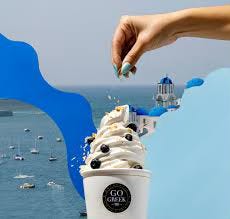
My classic order, for the record: original with blueberries and cacao nibs. Simple. Perfect. Non-negotiable. I didn’t talk prices in this piece because talking about money is gauche — but I will say that none of this is cheap. You are not at Menchie’s paying by the ounce anymore. You are at a yogurteria. There is a difference and apparently we are all willing to pay for it. Myself very much included. Drop your order in the comments!
Hahha love this! My order is almond butter drizzle, cacao nibs and blueberries or rasberries.i cant wait to go with you this summer!
♥️♥️♥️